
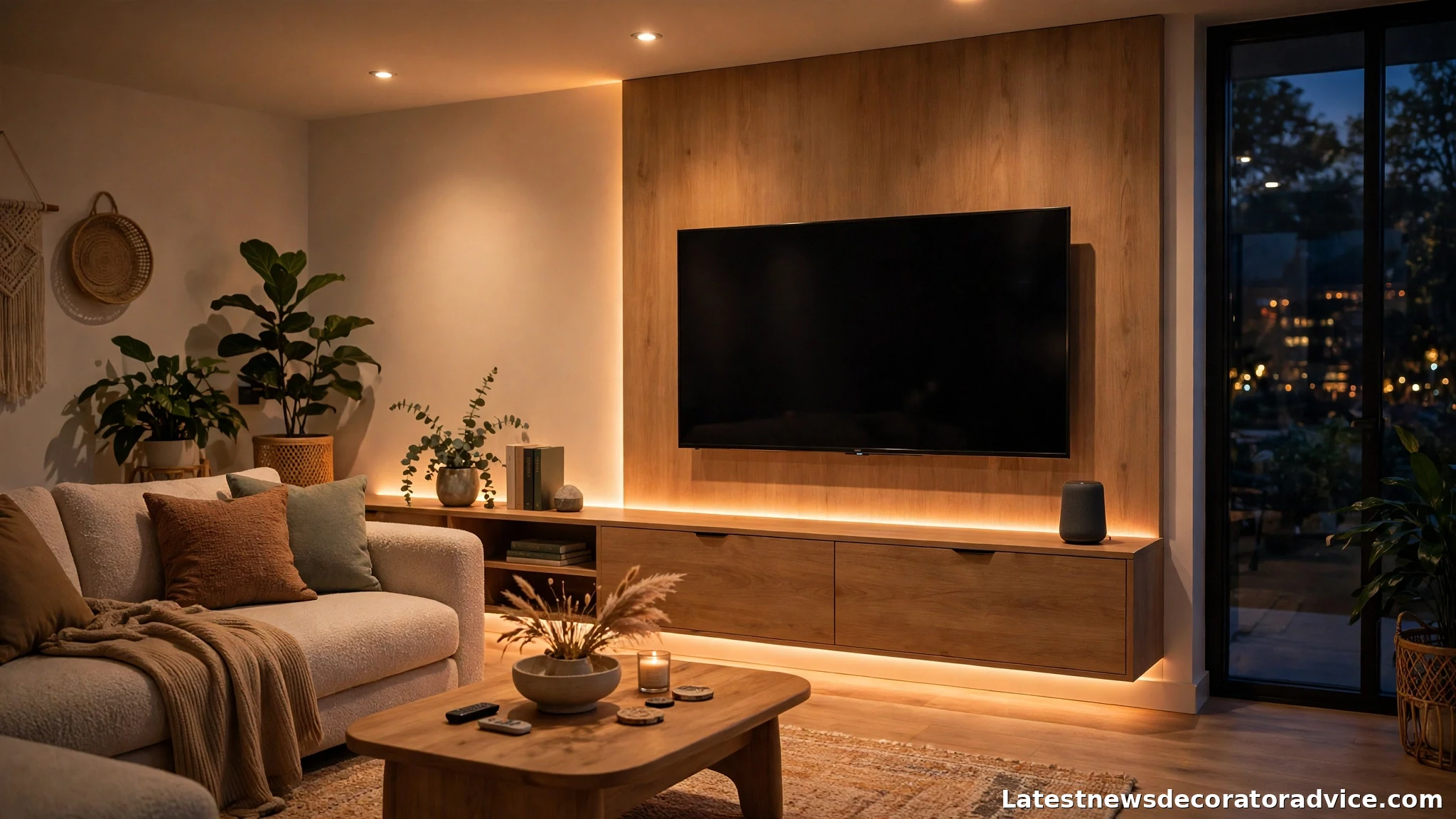
Making your home smarter does not require a complete overhaul or a large budget. With Decoradtech Smart Home Ideas By Decoratoradvice, you can start with simple, practical ideas that improve comfort, security, and energy use, one room at a time. The smartest homes are the ones that make daily life easier, not more complicated.
Begin by listing everyday frustrations: lights left on, a cold house in the morning, or worrying about whether doors are locked. Each frustration points to a simple smart solution, and solving one at a time keeps costs low and learning easy.
Decoradtech Smart Home Ideas By Decoratoradvice for Every Room
In the living room, smart lighting and a smart speaker can create scenes for films, reading, and relaxing, all controlled by voice or phone. In the kitchen, smart plugs, timers, and a connected speaker can help with cooking and routines. In bedrooms, smart lighting that dims at night and brightens gently in the morning can improve sleep and waking.
Start with lighting and heating
Lighting and heating give the quickest benefits. Smart bulbs and switches let you control brightness, colour, and schedules, while a smart thermostat learns your routine and avoids heating empty rooms. Together, they can cut waste without reducing comfort, especially when combined with simple habits such as closing curtains at night.
- Use schedules so lights and heating match your routine.
- Group devices by room for simple voice control.
- Keep one manual switch or control for every essential system.
- Test automations for a week before adding more.
Security, Comfort, and Energy in One Plan
For security, video doorbells, smart locks, and sensors can alert you to activity and let you check your home from anywhere. For comfort, temperature, humidity, and air-quality sensors help you understand your home and adjust heating or ventilation. For energy, smart plugs and energy monitors reveal which devices use the most power, so you can target savings.
The U.S. Department of Energy offers practical guidance on smart controls and energy-saving habits, which is a useful check against marketing claims when you choose new devices.
Make it work for everyone at home
A smart home should work for guests, children, and older relatives too. Keep controls simple, label devices clearly, and make sure essential functions, such as lights and locks, do not depend solely on a phone app. If a routine confuses anyone, simplify it: the best automation is one everyone understands.
Smart Home Ideas on a Budget
You do not need to buy everything at once, and you do not need the most expensive brand to get real benefits. Start with the room you use most, such as the living room or bedroom, and add one or two devices that solve a clear problem. A smart plug for a lamp, a smart bulb for a main light, or a single voice speaker can show you how smart routines feel in daily life before you spend more.
Look for bundles and sales, but compare total costs, including any subscriptions, before you commit. Reuse existing devices where possible, such as a spare phone or tablet as a control panel, and choose devices that work with the platform you already use, so you do not pay twice for incompatible systems. Keep receipts and note setup steps, because a small amount of planning now saves time when you expand later.
Set a monthly or yearly smart home budget, just as you would for any home improvement, and review it after each purchase. Ask whether the new device saves time, improves comfort, or cuts energy, and if it does none of these, wait. A slower, more deliberate approach usually produces a smarter home than a single large shopping trip, and it leaves room to learn what truly helps your household.
Build Your Smart Home Step by Step
Start with a single room and a single platform, then expand only when the first setup works reliably. Check Wi-Fi strength in each room, because weak coverage causes most smart home frustrations, and consider a mesh system or extender for larger homes. Add devices gradually, test each one, and keep a simple list of device names, passwords, and settings.
Think about privacy as you expand. Use strong, unique passwords, enable two-factor authentication, keep firmware updated, and review what data each device collects. Turn off features you do not use, and place cameras and microphones thoughtfully, respecting the privacy of family and visitors.
You can find related device advice in our guides to Decoradtech Home Devices From Decoratoradvice, Decoration Tips Decoradhouse From Decoratoradvice, and Decoradhouse Upgrade Tips By Decoratoradvice, and on the Decoratoradvice homepage.
Frequently Asked Questions
How much does a smart home cost to start? You can start with one smart bulb, plug, or speaker for a modest cost. Expand gradually, and judge each addition by the time, comfort, or energy it saves.
Do smart homes need fast internet? Most devices need reliable Wi-Fi, not necessarily very fast internet. Good coverage in each room matters more than headline speed for most smart home devices.
Can I make an older home smart? Yes. Most smart devices work in older homes, provided Wi-Fi coverage and wiring are adequate. Smart plugs, bulbs, and thermostats are good starting points, with professional help for heating controls if needed.
What if my Wi-Fi goes down? Keep manual controls for lights, heating, and locks, and choose devices that retain basic functions offline. This way, a network outage is an inconvenience, not a crisis.
Conclusion
A smarter home starts with simple ideas, applied well: better lighting, thoughtful heating, useful security, and routines that save time and energy. With Decoradtech Smart Home Ideas By Decoratoradvice, you can build gradually, keep costs under control, and enjoy a home that truly works for you.